Multilingual SEO Title Generation Guide
Multilingual SEO Title Generation: How to Create Optimized Titles for International Search
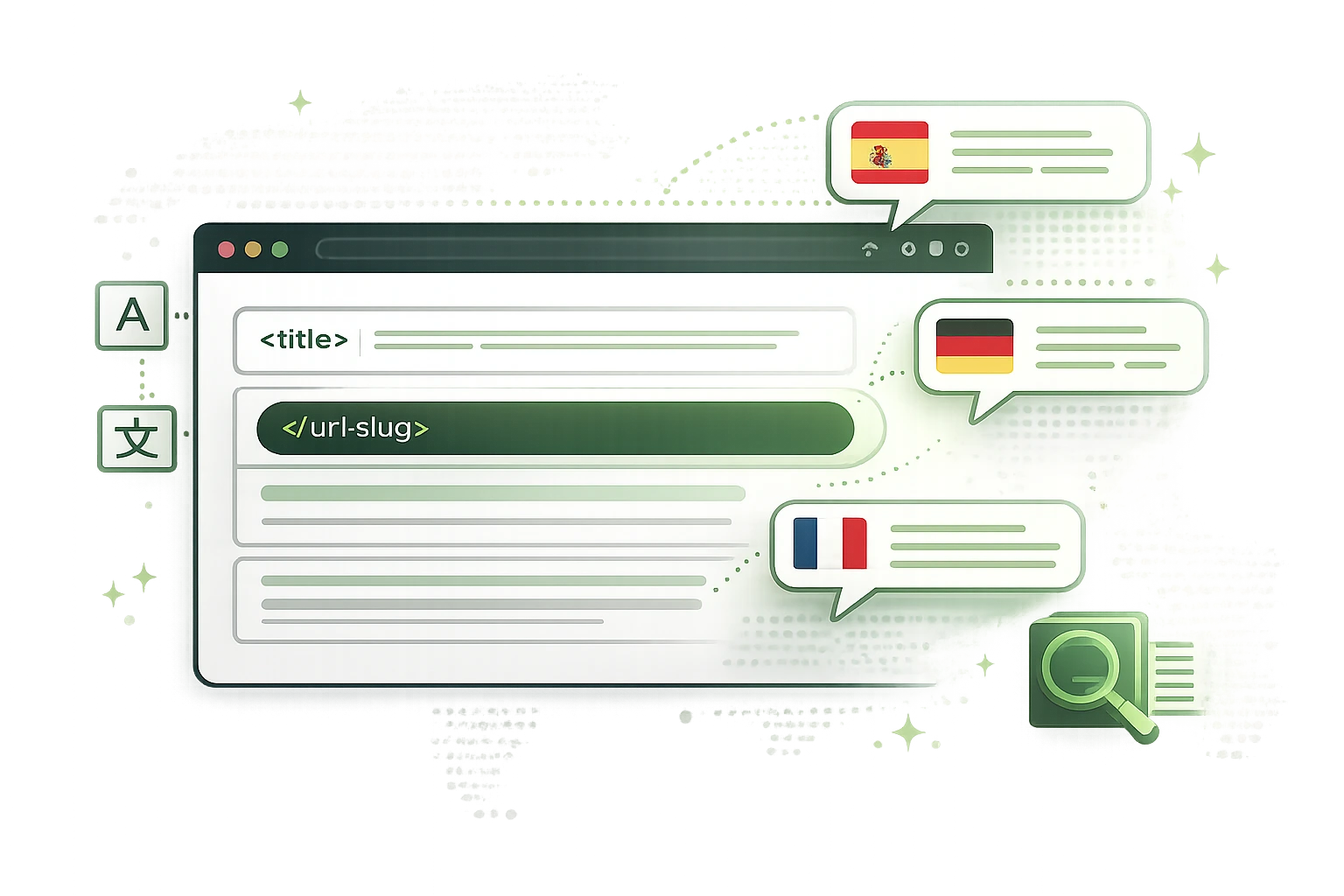
Writing a good SEO title is already a challenge. Doing it across multiple languages introduces an entirely new layer of complexity.
A title that performs well in English may fail completely in Spanish, German, or French search results. Direct translations rarely match how people actually search.
This is where multilingual SEO title generation becomes essential. Instead of translating titles word-for-word, the goal is to generate titles that match local search intent, keyword patterns, and user behavior in each language.
In this guide you'll learn how multilingual SEO titles work, how to generate them correctly, and how to avoid the mistakes that prevent international pages from ranking.
Quick Answer: What Is Multilingual SEO Title Generation?
Multilingual SEO title generation is the process of creating search-optimized page titles for different languages while maintaining keyword relevance, search intent, and readability.
Instead of translating titles directly, multilingual SEO requires adapting titles based on:
- local keyword variations
- search intent differences
- language-specific phrasing
- title length constraints in SERPs
This approach improves visibility in international search results and increases organic traffic from global audiences.
Why Multilingual SEO Titles Matter for International SEO
Search engines do not rank pages based on literal translations. They rank content based on how well it matches the queries people actually type.
For multilingual websites, optimized titles help search engines understand:
- the topic of the page
- the target language and audience
- the relevance of the content for specific search queries
Well-optimized titles can dramatically improve:
- international search visibility
- click-through rates in SERPs
- organic traffic from new markets
Challenges of Generating SEO Titles in Multiple Languages
Different Keyword Structures
Each language tends to structure keywords differently. What works in English may not reflect real search behavior in another language.
Example:
- SEO title generator
- generate SEO titles
- generador de títulos SEO
- outil générateur de titres SEO
Even when referring to the same concept, the phrasing changes significantly.
Search Intent Variations
Users in different regions often search with different intentions.
Some languages show more tutorial-style queries, while others favor tool-based queries.
Titles must reflect these patterns to perform well in search results.
Title Length Differences
Google usually displays around 50–60 characters of a page title. However, character density varies by language.
German titles tend to be longer, while English titles are typically shorter and more compact.
This means multilingual titles often require rewriting instead of translation.
Step-by-Step Process for Multilingual SEO Title Generation
1. Start With a Core SEO Topic
Begin with a central concept instead of a rigid keyword phrase.
Example concept:
- SEO title generation
This flexibility allows you to adapt titles for different languages naturally.
2. Research Keyword Variations per Language
Each language requires its own keyword research.
Examples of variations:
- SEO title generator
- generate SEO titles
- SEO title creation
- crear títulos SEO
- generador de títulos SEO
Understanding these variations helps align titles with real search queries.
3. Match the Title With Search Intent
Before writing a title, identify the intent behind the query:
- informational
- tool-based
- tutorial
- comparison
Titles should clearly signal the type of content users expect.
4. Optimize Titles for Click-Through Rate
Ranking is not enough. Titles must also attract clicks.
Effective SEO titles usually include:
- clear benefits
- specific outcomes
- action-oriented language
Example:
Multilingual SEO Title Generation: How to Create Optimized Titles for Global Search
5. Adapt Titles to Each Language
Rewrite the title so it sounds natural to native speakers.
Focus on clarity, readability, and keyword relevance rather than literal translation.
Example of Multilingual SEO Titles
Consider a page about generating SEO titles.
English
SEO Title Generator: Create Optimized Titles for Blogs and Pages
Spanish
Generador de Títulos SEO: Cómo Crear Títulos Optimizados
French
Générateur de Titres SEO pour Articles et Pages Web
Each title reflects natural search patterns in the target language.
Try It With the Tool
If you're working on multilingual SEO title generation, testing multiple title variations quickly can save a lot of time.
SEO Snapshot is a lightweight browser-based tool that helps generate:
- SEO titles
- meta descriptions
- URL slugs
- concise page summaries
The tool works entirely client-side and supports multilingual workflows, making it useful when adapting titles for international SEO.
Instead of manually rewriting dozens of title variations, you can quickly generate structured options and refine them based on your keyword strategy.
Common Mistakes in Multilingual SEO Title Generation
Literal Translation
Directly translating titles usually results in unnatural phrasing and weak keyword alignment.
Ignoring Local Keyword Research
Different regions use different search terms. Without localized research, titles may miss important queries.
Keyword Stuffing
Overloading titles with keywords reduces readability and can harm click-through rates.
Using Identical Title Structures
Each language has its own natural syntax. Titles should be adapted accordingly.
Frequently Asked Questions
What is multilingual SEO title generation?
Multilingual SEO title generation is the process of creating optimized page titles for multiple languages while maintaining search intent, keyword relevance, and readability for each target audience.
Can I just translate SEO titles?
No. Direct translations rarely match how users search in other languages. Titles should be adapted based on local keyword research and search behavior.
How long should an SEO title be?
Most SEO titles perform best between 50 and 60 characters, although the ideal length can vary slightly depending on language and keyword structure.
Why are multilingual SEO titles important?
They improve visibility in international search results, help search engines understand the language and audience of a page, and increase organic traffic from global markets.
Conclusion
Multilingual SEO title generation is essential for websites targeting international audiences.
Rather than translating titles directly, successful multilingual SEO focuses on search intent, keyword variation, and natural phrasing in each language.
By researching local search behavior and testing different title structures, you can create titles that rank well across multiple markets.
Tools like SEO Snapshot simplify this process by generating optimized titles, meta descriptions, and slugs directly in the browser.
With the right approach, multilingual SEO titles can significantly expand your organic reach and unlock new international traffic opportunities.